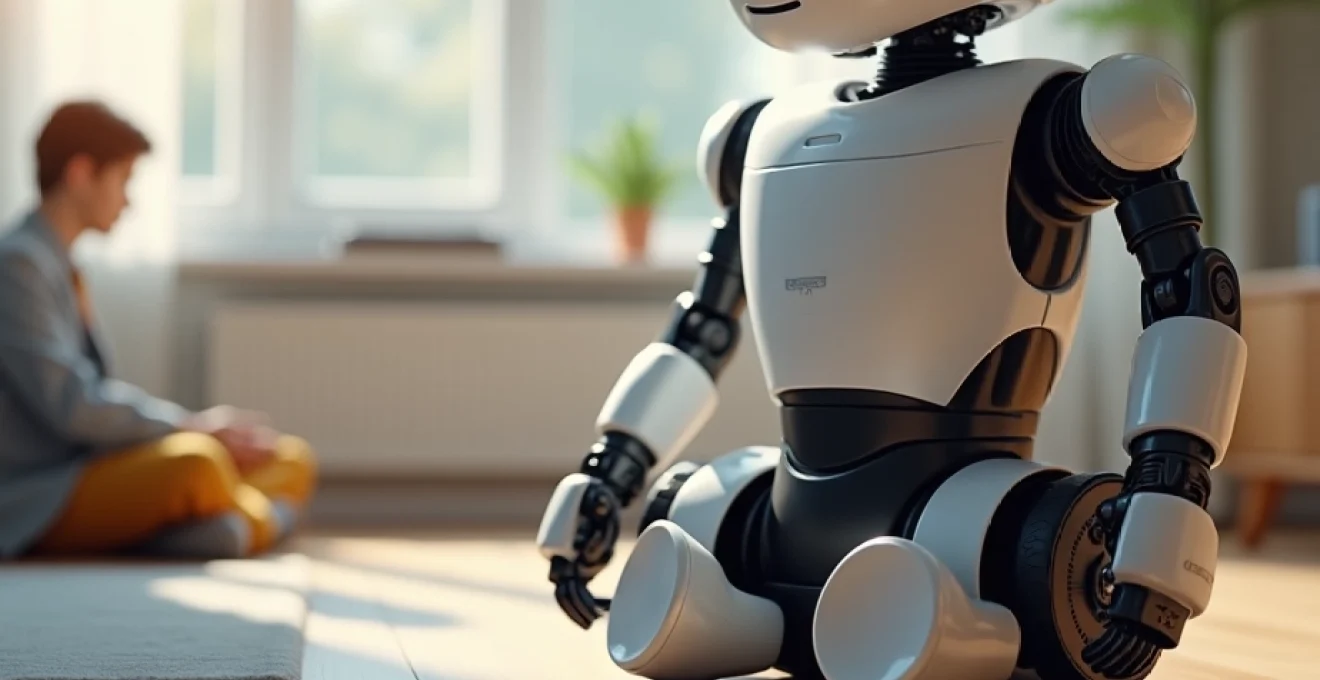
The realm of domestic robotics is on the cusp of a revolutionary transformation. As we venture into an era of increasingly sophisticated household assistants, the concept of a single-purpose robot is rapidly becoming obsolete. The future promises multitasking household robots capable of juggling an array of domestic duties with remarkable efficiency. These advanced machines are set to redefine our relationship with technology in the home, offering unprecedented levels of convenience and automation. But what exactly can we anticipate from these next-generation robotic helpers?
Evolution of household robot capabilities: from vacuum cleaners to Multi-Function assistants
The journey of household robots began with humble origins in the form of automated vacuum cleaners. These early pioneers, while revolutionary in their own right, were limited in scope and functionality. However, they laid the groundwork for what was to come. As technology progressed, so did the capabilities of these domestic assistants.
Today, we stand at the threshold of a new era in household robotics. The modern multitasking robot is a far cry from its single-function predecessors. These advanced machines are capable of performing a diverse range of tasks, from cleaning and security to environmental monitoring and even personal assistance. The evolution has been driven by rapid advancements in artificial intelligence, sensor technology, and robotics engineering.
The transition from simple vacuum cleaners to multi-function assistants has been marked by several key developments. Improved navigation systems allow robots to map and traverse complex home layouts with ease. Enhanced object recognition capabilities enable them to interact with various household items intelligently. Perhaps most crucially, the integration of AI has endowed these robots with the ability to learn and adapt to the unique needs of each household.
Core technologies enabling multitasking in domestic robots
The leap from single-task to multitasking robots has been made possible by a convergence of cutting-edge technologies. These core technologies form the backbone of modern household robots, enabling them to perform a wide array of functions efficiently and effectively.
Advanced sensor arrays for environmental perception
At the heart of any multitasking robot lies a sophisticated array of sensors. These sensors act as the robot’s ‘eyes and ears’, allowing it to perceive and interact with its environment. Modern household robots employ a combination of visual, auditory, and tactile sensors to build a comprehensive understanding of their surroundings.
LiDAR (Light Detection and Ranging) technology, for instance, enables robots to create detailed 3D maps of their environment. This allows for precise navigation and obstacle avoidance. Infrared sensors help in detecting heat signatures, useful for both security applications and energy management. Ultrasonic sensors provide accurate distance measurements, crucial for tasks requiring precise movements.
Ai-driven task planning and execution systems
The brain of a multitasking household robot is its AI-driven task planning and execution system. This sophisticated software allows the robot to prioritize tasks, make decisions, and adapt to changing circumstances. Machine learning algorithms enable the robot to improve its performance over time, learning from past experiences and user preferences.
These AI systems can handle complex scenarios, such as deciding whether to interrupt a cleaning task to respond to a security alert, or how to optimally schedule tasks throughout the day. They also enable natural language processing, allowing users to interact with their robots through voice commands and even engage in basic conversations.
Modular hardware design for versatile functionality
The physical design of multitasking robots has evolved to support their diverse capabilities. Many modern robots feature modular designs that allow for easy attachment and detachment of various tools and accessories. This modularity enables a single robot to transform its functionality based on the task at hand.
For example, a robot might have a base unit for mobility and core processing, with interchangeable modules for vacuuming, mopping, or even serving as a mobile security camera. This adaptability ensures that the robot can efficiently tackle a wide range of household tasks without the need for multiple specialized units.
Machine learning algorithms for adaptive behavior
The true power of multitasking robots lies in their ability to learn and adapt. Advanced machine learning algorithms allow these robots to continuously improve their performance based on user feedback and environmental data. Over time, a household robot can learn the layout of a home, the daily routines of its occupants, and even individual preferences for how tasks should be performed.
These adaptive capabilities extend beyond just improving efficiency. They also allow robots to anticipate needs and proactively offer assistance. For instance, a robot might learn that you typically need a cup of coffee at a certain time each morning and prepare it without being explicitly instructed to do so.
Key multitasking features in Next-Generation household robots
As we look towards the future of household robotics, several key features are emerging as standard in next-generation models. These features showcase the true multitasking capabilities of modern domestic robots and hint at the transformative impact they’re set to have on our daily lives.
Simultaneous cleaning and object recognition
Gone are the days when robot vacuums would blindly bump into furniture. Modern multitasking robots combine cleaning functionality with advanced object recognition capabilities. This allows them to not only navigate around obstacles more efficiently but also to identify and handle different types of messes appropriately.
For example, a robot might recognize a spilled liquid and switch from vacuuming to mopping mode. It could also identify delicate objects or areas that require special attention, adjusting its cleaning approach accordingly. This level of intelligent cleaning ensures a more thorough and careful maintenance of your home.
Integrated home security and environmental monitoring
Many next-generation household robots are doubling as mobile security systems. Equipped with cameras and various sensors, these robots can patrol your home while you’re away, alerting you to any unusual activity. Some models even integrate with existing smart home security systems for a comprehensive security solution.
Beyond security, these robots often monitor environmental factors such as air quality, temperature, and humidity. They can alert you to potential issues like gas leaks or high levels of allergens, and some can even take action by activating air purifiers or adjusting smart thermostats.
Voice-activated personal assistant capabilities
Multitasking robots are increasingly incorporating voice assistant technology, allowing them to serve as mobile, hands-free helpers throughout your home. You can ask your robot for weather updates, to set reminders, or even to control other smart devices in your home.
This integration of personal assistant capabilities with physical tasks creates a truly versatile household helper. Imagine asking your robot to check if you’re running low on milk, and having it physically go to the refrigerator to verify, then add it to your shopping list if needed.
Automated inventory management and restocking
One of the more advanced features emerging in household robots is automated inventory management. Using a combination of object recognition, barcode scanning, and AI, these robots can keep track of household supplies and groceries. They can alert you when items are running low and even place online orders for restocking.
This feature extends beyond just food and cleaning supplies. Some robots can monitor the status of items like light bulbs or air filters, ensuring you’re always prepared with replacements before they’re needed. This level of proactive management takes a significant burden off the homeowner, ensuring the smooth running of the household.
Challenges in developing multitasking household robots
While the potential of multitasking household robots is immense, their development is not without challenges. Engineers and designers face several hurdles in creating robots that can effectively and safely perform a wide range of tasks in the unpredictable environment of a home.
One of the primary challenges is balancing versatility with specialization. While we want these robots to perform many tasks, there’s a risk of them becoming a “jack of all trades, master of none”. Developers must find ways to ensure that each function of the robot performs at a level comparable to specialized devices.
Another significant challenge is navigating the complex and ever-changing landscape of a home. Unlike controlled industrial environments, homes are filled with moving obstacles (including people and pets), varied surfaces, and objects that may be fragile or require special handling. Creating robots that can safely and effectively operate in these conditions requires sophisticated AI and sensor systems.
Privacy and security concerns also present significant challenges. With robots capable of moving throughout a home and collecting data, ensuring the protection of users’ personal information is paramount. Developers must implement robust security measures to prevent unauthorized access or data breaches.
Finally, there’s the challenge of user adoption and integration into daily life. For multitasking robots to be successful, they need to be intuitive to use and genuinely helpful in day-to-day activities. This requires not just technological innovation, but also careful consideration of user experience and human-robot interaction design.
Impact of multitasking robots on domestic life and labour
The introduction of multitasking robots into our homes is set to have a profound impact on domestic life and labour. These advanced machines promise to revolutionize how we manage our households, potentially freeing up significant time and energy for other pursuits.
One of the most immediate impacts will likely be on the distribution of household chores. Tasks that once required significant time and effort, such as cleaning, laundry, or even basic home maintenance, could be largely automated. This could lead to a reduction in domestic labour, potentially alleviating some of the stress and time constraints many households face.
However, the impact goes beyond just reducing workload. Multitasking robots have the potential to enhance home safety and efficiency. With their ability to monitor the environment and perform predictive maintenance, these robots could help prevent accidents and catch potential issues before they become serious problems.
The integration of these robots into our homes may also change how we interact with our living spaces. Voice-activated features and mobile capabilities mean that managing your home could become as simple as speaking a command, regardless of where you are in the house. This level of convenience could fundamentally alter our daily routines and expectations of home life.
It’s important to consider the potential social implications as well. While these robots can certainly make life easier, they may also reduce opportunities for family bonding over shared chores or potentially impact the development of life skills in children. Striking a balance between convenience and maintaining important aspects of family life will be a key consideration for many households.
Future prospects: towards fully autonomous household management
As we look to the future, the trajectory of multitasking household robots points towards a vision of fully autonomous household management. While current technologies are impressive, they represent just the beginning of what’s possible in this rapidly evolving field.
Integration with smart home ecosystems
The next big leap in household robotics is likely to be seamless integration with broader smart home ecosystems. Future robots will likely act as mobile hubs for your smart home, able to interact with and control various smart devices throughout the house. This could enable scenarios where your robot coordinates with your smart thermostat, lighting, and security systems to optimize energy usage and home comfort based on your routines and preferences.
Predictive maintenance and Self-Diagnosis
Advanced AI and machine learning capabilities will enable future robots to perform predictive maintenance not just on themselves, but on your home as well. They might be able to detect early signs of wear in household appliances, predict when a light bulb is about to burn out, or even identify potential structural issues in your home before they become serious problems.
Emotional intelligence and social interaction capabilities
As AI continues to advance, we may see household robots develop more sophisticated emotional intelligence and social interaction capabilities. This could lead to robots that can provide companionship, especially for elderly or isolated individuals. They might be able to engage in more natural conversations, recognize emotional states, and respond appropriately to provide comfort or support.
Collaborative task execution with humans and other devices
The future of household robotics is likely to involve more collaborative interactions between robots, humans, and other smart devices. We might see scenarios where multiple specialized robots work together to accomplish complex tasks, or where robots can seamlessly hand off tasks to humans when they encounter situations beyond their capabilities.
This collaborative approach could extend to how robots interact with other smart home devices. For instance, a robot might work in tandem with a smart oven to prepare meals, or coordinate with a smart irrigation system to tend to your garden.
As these technologies continue to evolve, the line between science fiction and reality in home automation is becoming increasingly blurred. The prospect of fully autonomous household management, while still some years away, is no longer a distant dream but an emerging reality that promises to transform our domestic lives in profound and exciting ways.