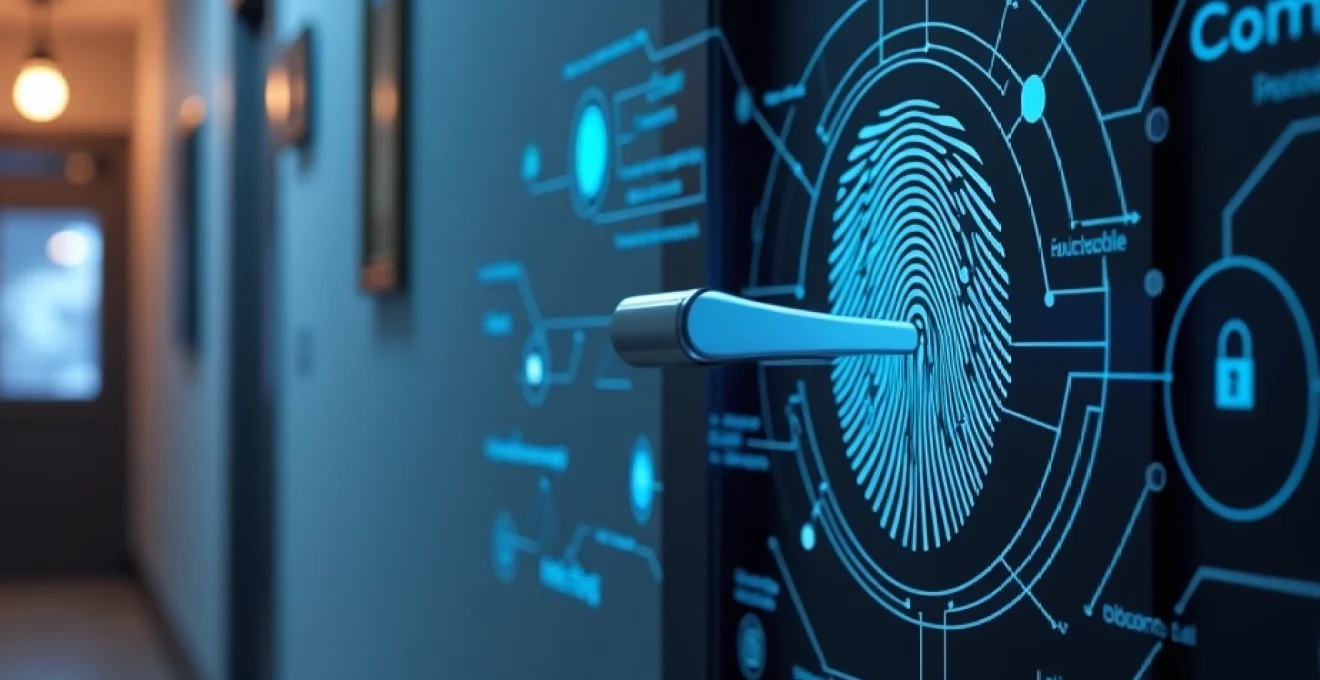
The evolution of home security has taken a significant leap forward with the introduction of biometric smart locks. These advanced devices leverage unique biological characteristics to grant access, offering a level of security and convenience that traditional locks simply cannot match. By integrating cutting-edge technology with robust physical hardware, biometric smart locks are revolutionising the way we protect our homes and manage entry.
Biometric authentication methods, such as fingerprint recognition, facial scanning, and even iris detection, provide a highly personalised approach to security. These systems are designed to recognise the unique physiological traits of authorised users, making it exceedingly difficult for unauthorised individuals to gain entry. As households increasingly seek more sophisticated and reliable security solutions, biometric smart locks are emerging as a frontrunner in the quest for enhanced home protection.
Biometric authentication technologies in smart locks
The core principle behind biometric smart locks is the use of unique biological characteristics to verify identity and grant access. These systems employ various technologies to capture and analyse biometric data, ensuring that only authorised individuals can enter the premises. The most common biometric authentication methods used in smart locks include fingerprint recognition, facial scanning, voice recognition, and iris scanning.
Each of these technologies offers its own set of advantages and considerations. Fingerprint recognition, for instance, is widely adopted due to its reliability and ease of use. Facial recognition systems provide a hands-free option that can be particularly convenient when carrying groceries or other items. Voice recognition allows for remote access control, while iris scanning is considered one of the most secure biometric methods available.
The implementation of these technologies in smart locks requires sophisticated sensors and algorithms to accurately capture and process biometric data. As the technology continues to advance, we’re seeing increasingly robust and reliable biometric authentication systems integrated into home security solutions.
Fingerprint recognition systems for residential security
Fingerprint recognition has become one of the most popular biometric authentication methods for smart locks, offering a blend of security and convenience that appeals to many homeowners. These systems use advanced sensors to capture high-resolution images of a user’s fingerprint, which are then analysed and compared against stored templates to grant or deny access.
Capacitive vs. optical fingerprint sensors in smart locks
Two primary types of fingerprint sensors are commonly used in smart locks: capacitive and optical. Capacitive sensors use electrical current to create a detailed 3D image of the fingerprint, offering high accuracy and resistance to spoofing attempts. Optical sensors, on the other hand, use light to capture an image of the fingerprint, which is then analysed for unique patterns.
While both types of sensors can provide reliable authentication, capacitive sensors are generally considered more secure due to their ability to detect the presence of a living finger. This feature makes them more resistant to attempts at bypassing the system using fake fingerprints or other fraudulent methods.
False acceptance rate (FAR) and false rejection rate (FRR) optimization
The effectiveness of fingerprint recognition systems is often measured by two key metrics: the False Acceptance Rate (FAR) and the False Rejection Rate (FRR). FAR refers to the likelihood of the system incorrectly granting access to an unauthorised user, while FRR indicates the probability of the system incorrectly denying access to an authorised user.
Optimising these rates is crucial for ensuring both security and user satisfaction. A low FAR is essential for maintaining high security, while a low FRR ensures that authorised users can reliably access their homes without frustration. Smart lock manufacturers continually refine their algorithms and sensor technologies to achieve the optimal balance between these two factors.
Multi-factor authentication: combining fingerprints with PINs
To further enhance security, many biometric smart locks incorporate multi-factor authentication systems. These systems typically combine fingerprint recognition with additional verification methods, such as personal identification numbers (PINs) or physical keys. By requiring multiple forms of authentication, these locks significantly reduce the risk of unauthorised access.
Multi-factor authentication can be particularly useful in situations where extra security is required, or when homeowners want to grant temporary access to guests or service providers. For example, a homeowner might use their fingerprint for everyday access, but require both a fingerprint and a PIN when returning from an extended absence.
Liveness detection to prevent fingerprint spoofing
As biometric systems become more widespread, so too do attempts to circumvent them. One potential vulnerability in fingerprint recognition systems is the use of fake fingerprints or lifted prints to gain unauthorised access. To counter this threat, advanced smart locks incorporate liveness detection features.
Liveness detection uses various techniques to ensure that the fingerprint being scanned belongs to a living person. These methods may include detecting blood flow, measuring electrical conductivity, or analysing subtle changes in finger pressure during the scanning process. By implementing liveness detection, smart locks can significantly reduce the risk of successful spoofing attempts, further enhancing their security capabilities.
Facial recognition integration in home entry systems
Facial recognition technology has made significant strides in recent years, and its integration into home entry systems is becoming increasingly common. This hands-free biometric authentication method offers a convenient and secure way to control access to your home, using advanced algorithms to analyse and match facial features.
3D facial mapping vs. 2D image analysis for access control
Facial recognition systems in smart locks typically use one of two main approaches: 3D facial mapping or 2D image analysis. 3D facial mapping creates a detailed three-dimensional model of the user’s face, capturing depth and contours that provide a more comprehensive and accurate representation. This method is generally more secure and harder to fool than 2D systems.
2D image analysis, while less complex, can still offer robust security when combined with advanced algorithms. These systems analyse key facial features and their relationships, creating a unique template for each authorised user. While potentially more susceptible to spoofing than 3D systems, modern 2D facial recognition technologies incorporate additional security measures to enhance their reliability.
Deep learning algorithms for facial feature extraction
The heart of facial recognition technology lies in the algorithms used to extract and analyse facial features. Deep learning algorithms, a subset of artificial intelligence, have revolutionised this process by enabling systems to learn and improve their accuracy over time.
These algorithms can identify and analyse hundreds of distinct facial features, creating a unique “faceprint” for each user. As the system encounters more images of authorised users under various conditions (different lighting, angles, or even as users age), it can refine its recognition capabilities, leading to improved accuracy and reduced false rejections.
Infrared and thermal imaging for Low-Light conditions
One challenge faced by facial recognition systems is maintaining accuracy in low-light conditions. To address this, many advanced smart locks incorporate infrared or thermal imaging technologies. These systems can capture clear images of a user’s face even in complete darkness, ensuring reliable access control at any time of day or night.
Infrared cameras use near-infrared light to illuminate the face, capturing details invisible to the naked eye. Thermal imaging, on the other hand, detects the heat signature of the face, creating a unique thermal map that can be used for identification. These technologies not only enhance the system’s ability to function in various lighting conditions but also add an extra layer of security by making it more difficult to fool the system with photographs or masks.
Privacy concerns and data storage in facial recognition locks
As with any technology that collects and processes personal data, facial recognition in smart locks raises important privacy considerations. Homeowners may be concerned about the storage and potential misuse of their biometric data. To address these concerns, reputable smart lock manufacturers implement robust data protection measures.
Many systems store biometric data locally within the lock itself, rather than transmitting it to external servers. This approach minimises the risk of data breaches and unauthorised access. Additionally, the facial templates used for recognition are typically encrypted and cannot be reverse-engineered to recreate an actual image of the user’s face. As privacy regulations evolve, smart lock manufacturers continue to adapt their technologies to ensure compliance and protect user data.
Voice recognition technology for Hands-Free access
Voice recognition technology offers a unique approach to biometric authentication in smart locks, providing a hands-free and convenient method of access control. By analysing the unique characteristics of a person’s voice, these systems can verify identity and grant entry without requiring physical interaction with the lock.
Voice recognition systems in smart locks typically use advanced algorithms to analyse various aspects of speech, including pitch, tone, and speech patterns. These systems create a voiceprint for each authorised user, which is then used for comparison when access is requested. The technology has evolved to recognise not just specific phrases or passwords, but also to identify the speaker regardless of what is being said, enhancing both security and convenience.
One of the key advantages of voice recognition is its potential for integration with smart home systems. Users can combine voice commands for unlocking doors with other home automation tasks, creating a seamless and intuitive interaction with their living space. However, challenges such as background noise and variations in voice due to illness or stress need to be addressed to ensure reliable performance in real-world conditions.
Iris scanning: High-Security option for residential locks
Iris scanning represents one of the most secure biometric authentication methods available for residential smart locks. This technology captures a high-resolution image of the iris, the coloured part of the eye, which contains a complex and unique pattern of features.
The iris pattern is highly stable throughout a person’s life and is considered even more unique than a fingerprint. Iris scanning systems use near-infrared light to capture detailed images of the iris, which are then analysed and compared against stored templates. This process is extremely accurate, with very low false acceptance and false rejection rates.
While iris scanning technology offers unparalleled security, its implementation in residential smart locks has been limited due to the higher cost and complexity compared to other biometric methods. However, as the technology becomes more accessible and affordable, we may see increased adoption of iris scanning in high-security residential applications.
Smart lock connectivity and integration
The effectiveness of biometric smart locks is significantly enhanced by their ability to connect and integrate with other smart home systems. This connectivity not only improves the overall functionality of the lock but also allows for more comprehensive home security and automation solutions.
Wi-fi vs. bluetooth low energy (BLE) communication protocols
Smart locks typically use either Wi-Fi or Bluetooth Low Energy (BLE) for communication. Wi-Fi connectivity offers the advantage of remote access and control from anywhere with an internet connection. This allows homeowners to monitor and manage their locks even when they’re away from home. However, Wi-Fi connectivity can be more power-intensive, potentially leading to shorter battery life.
Bluetooth Low Energy, on the other hand, is more energy-efficient and provides reliable short-range communication. BLE is often used for direct interaction between the lock and a smartphone app when in close proximity. Some smart locks use a combination of both technologies, leveraging BLE for day-to-day operations and Wi-Fi for remote access and updates.
Z-wave and zigbee integration for smart home ecosystems
Z-Wave and Zigbee are wireless communication protocols specifically designed for smart home devices. These technologies allow smart locks to integrate seamlessly with broader home automation systems. By using Z-Wave or Zigbee, smart locks can communicate with other devices such as security cameras, smart lights, and home automation hubs.
This integration enables more sophisticated automation scenarios. For example, unlocking the front door could automatically disarm the security system, turn on lights, and adjust the thermostat. The low power consumption and mesh network capabilities of these protocols also contribute to improved reliability and extended battery life for smart locks.
Mobile app development for remote lock management
Mobile applications play a crucial role in the functionality and user experience of biometric smart locks. These apps serve as the primary interface for managing the lock, allowing users to control access, monitor activity, and configure settings remotely.
Well-designed mobile apps offer features such as real-time notifications of lock activity, the ability to grant or revoke access permissions, and integration with digital assistants for voice control. Some apps also provide detailed access logs, allowing homeowners to track who has entered or exited the property and when.
API integration with home automation platforms (e.g., HomeKit, alexa)
To maximise the potential of smart locks within a connected home environment, many manufacturers provide API (Application Programming Interface) integration with popular home automation platforms. This allows smart locks to work seamlessly with systems like Apple HomeKit, Amazon Alexa, or Google Home.
API integration enables users to control their smart locks through voice commands or include them in complex automation routines. For instance, a homeowner could create a “goodnight” routine that locks all doors, turns off lights, and sets the alarm system with a single command. This level of integration not only enhances convenience but also improves overall home security by ensuring that all systems work together cohesively.
Cybersecurity measures for biometric smart locks
As biometric smart locks become more sophisticated and connected, ensuring robust cybersecurity measures is paramount. These devices not only control physical access to our homes but also store sensitive biometric data, making them potential targets for cyber attacks.
End-to-end encryption for biometric data transmission
One of the most critical security measures implemented in modern smart locks is end-to-end encryption for all data transmissions. This ensures that biometric data, access codes, and commands sent between the lock, mobile apps, and cloud servers cannot be intercepted or tampered with by malicious actors.
Advanced encryption protocols, such as AES-256, are typically used to secure these communications. Additionally, many smart lock systems employ certificate-based authentication to verify the identity of devices and servers, further enhancing security against man-in-the-middle attacks.
Secure element (SE) implementation for credential storage
To protect sensitive data stored within the smart lock itself, many manufacturers implement a Secure Element (SE). This is a tamper-resistant hardware component designed specifically for secure storage of cryptographic keys, biometric templates, and other critical security parameters.
The Secure Element provides an isolated environment for processing sensitive operations, making it extremely difficult for attackers to extract or manipulate stored credentials even if they gain physical access to the lock. This hardware-based security approach significantly enhances the overall protection of the smart lock system.
Regular firmware updates and vulnerability patching
Maintaining the security of smart locks requires ongoing vigilance and updates. Manufacturers regularly release firmware updates to address newly discovered vulnerabilities, improve performance, and add new features. These updates are crucial for maintaining the security integrity of the lock over time.
Many smart locks now feature over-the-air (OTA) update capabilities, allowing firmware to be updated remotely through the mobile app or home automation hub. This ensures that security patches can be quickly deployed to address emerging threats. Users should be encouraged to keep their smart lock firmware up to date and to enable automatic updates when available.
Two-factor authentication (2FA) for enhanced security
To provide an additional layer of security, many smart lock systems implement two-factor authentication (2FA) for user accounts. This typically involves combining something the user knows (like a password) with something they have (such as a mobile device) or something they are (biometric data).
2FA significantly reduces the risk of unauthorised access to smart lock management systems, even if a user’s password is compromised. For example, a user might be required to enter a password and then confirm their identity through a fingerprint scan or a code sent to their registered mobile device before being able to make changes to lock settings or access permissions.
By implementing these comprehensive cybersecurity measures, manufacturers of biometric smart locks aim to provide homeowners with a secure, reliable, and convenient access control solution. As technology continues to evolve, we can expect to see even more advanced security features integrated into these devices, further enhancing their ability to protect our homes and personal data.